
Te Awamutu · Waikato
Vintage and classic radiator restoration
Old copper-brass work that most workshops turn away. Recored, repaired and finished to suit the vehicle.
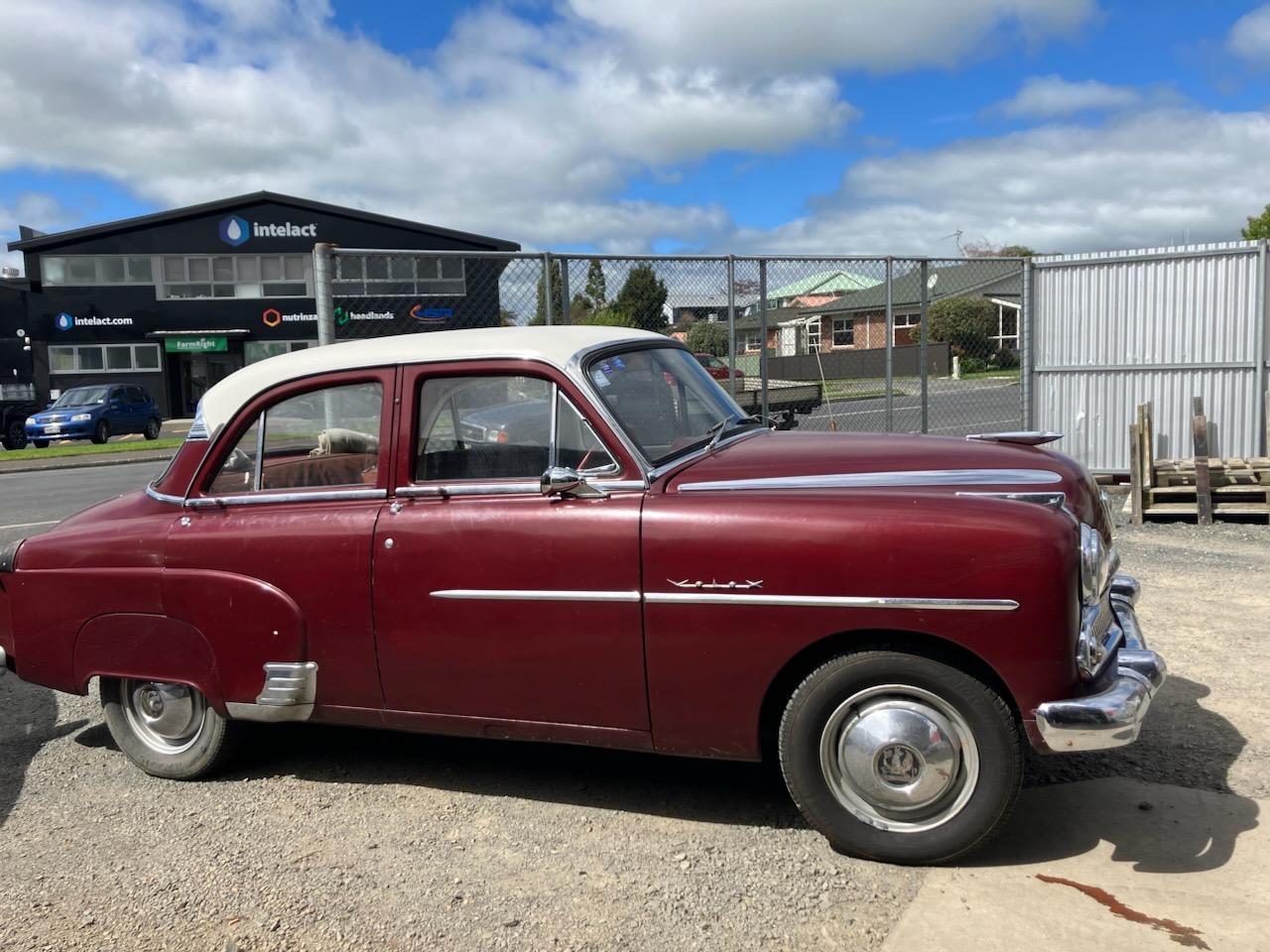
The kind of classic that still runs a copper-brass radiator.
Keeping the original radiator
On a restoration, the radiator is a visible part of the car. A modern aluminium replacement under the bonnet of a vehicle that should have a copper-brass unit is the sort of detail that stands out to anyone who knows what they're looking at, and there's frequently no replacement available anyway.
Recoring keeps the original tanks, the original fittings and the original mounting, and puts new cooling capacity behind them. The car keeps its correct appearance and stops overheating in traffic.
Copper-brass is repairable
Old radiators were built out of copper and brass, soldered together, and made to be taken apart and worked on. That's why a radiator from decades ago can still be brought back while a modern plastic-and-aluminium unit gets thrown away.
It's a trade skill rather than a parts-swap, which is why this work tends to end up at specialist workshops.
What stays original, what gets renewed
On a restoration the radiator is visible. The aim is a car that cools properly and still looks right with the bonnet up.
Kept original
- The original tanks, wherever they're sound
- Filler neck, cap and fittings
- Mounting points and brackets
- Overall profile and proportions
- Any maker's markings on the tanks
Renewed
- The core itself, in copper-brass
- Perished solder joints, re-run
- Corroded seams and pinholes
- Cooling capacity, often better than new
- Finish, to suit the vehicle
Copper-brass was built to be taken apart and worked on. That's why a radiator from decades ago can come back while a modern plastic-and-aluminium unit gets thrown away.
Common questions
Can you match the original core pattern?
Core patterns vary and what's available changes. Bring the radiator in and we'll talk through the options for your vehicle.
My classic overheats in traffic but is fine on the open road. Why?
At speed there's airflow through the core regardless of the fan. In traffic there isn't, so it exposes reduced cooling capacity and weak fan performance. Usually it points to a tired core.
Do you work on vintage tractors and machinery too?
Yes. Same construction, same work.
Also from the workshop
Related services
Radiator recoring
New copper-brass cores fitted to your existing tanks. Often the better call on older and heavy units where a replacement isn't available.
Read moreCar and ute radiators
Leaks, overheating and replacement radiators for everyday vehicles. Same workshop, same testing, smaller job.
Read moreCooling system servicing
Flushes, pressure testing, hoses, fan belts, thermostats and water pumps. The whole system, not just the radiator.
Read moreGot a radiator that needs looking at?
Give the workshop a call and talk it through. If it's easier, send photos and the details through the enquiry form and we'll come back to you.